
ediciones
Unexpected Method 2025

A/R/TOGRÁFICA'11
Muestra Internacional
de Videonarración
Marzo-junio 2025
PRODUCCIÓN:
DIRECCIÓN /Direction
Ángel García Roldán
COORDINACIÓN /Coordination
Fernando Bayona González
María Martínez Morales
Xabier Molinet Medina
Rocío Lara Osuna
Manuel Pérez Valero
Javier Valseca Delgado
María de los Ángeles González Merino
PROGRAMA /Program
Ángel García Roldán
Fernando Bayona González
DOCUMENTACIÓN /Archives & Documentation
Ángel García Roldán
Laura López Sánchez
Francisco Javier Valseca delgado
COLABORACIÓN:
Palacio de los Condes de Gabia
Diputación de Granada
La Madraza CCC
Universidad de Granada
CARTEL
CARTEL HORIZONTAL
Unexpected Method:
de lo insospechado y fortuito en la a/r/tografía audiovisual
El concepto de una imagen en movimiento invoca la idea de que lo vivo puede quedar atrapado en un «éter» audiovisual, pues el acto de grabar o filmar es una forma de copiar el tiempo. Como ante un espejo, lo que vemos ocurre porque el vídeo tiene esa capacidad de duplicarnos, generando una doble visión: la mirada hacia nosotros y la mirada que se evoca a sí misma.
Con esta premisa arranca una nueva edición de la muestra que, tras once años de existencia, persigue sostener un pulso con el tiempo y adentrarse en nuevos territorios culturales, tanto los más cercanos como los más lejanos. Lo importante no reside en la distancia, sino en el acontecimiento inesperado del futuro: un futuro controvertido e impredecible.
Unexpected Method, título que sirve de hilo conductor para la programación de esta muestra, se ha convertido en un ideario que define los laboratorios de esta 11.ª edición. Adoptar una actitud ante lo inesperado va más allá de una mera adaptación; es una actitud pedagógica fundamental en cualquier proceso de investigación. ¿Qué sería de la investigación si no asumimos que todo puede ser diferente a lo esperado? El ensayo nos predispone al asombro de lo inesperado: un juego donde las expectativas se reconfiguran al instante en que ocurre lo imprevisto.
En educación, aceptar lo inesperado implica desarrollar la capacidad adaptativa de los colectivos para generar nuevos escenarios creativos. Estos escenarios permiten estructurar y sistematizar nuevas herramientas de aprendizaje; herramientas que modifican lo establecido y ofrecen nuevas perspectivas. Desde esta perspectiva, la creación artística, o es inesperada o no será recordada. Aunque la forma perdure, su interés se liga a una sospecha imprecisa, sostenida en lo imprevisible. Unexpected Method, el método de lo repentino, lo inopinado, lo impensado y lo inesperado: una mirada flexible y permeable al cambio, ante la imposibilidad de mantener la continuidad en el laboratorio del tiempo.
Desde A/R/TOGRÁFICA, entendemos la educación artística como un vasto laboratorio donde convergen diversos escenarios para provocar y medir lo inesperado. Analizar sus probabilidades nos ha llevado a nuevas formas de experimentar, creando formas, estructuras e instrumentos que, partiendo del lenguaje audiovisual, nos preparan para desarrollar nuevos relatos humanos. Se trata de una herramienta metodológica esencial. La imagen en movimiento y su experimentación constituyen un conflicto múltiple, transversal y confluente; un proceso que concreta lo que, de alguna manera, esperamos ser. En definitiva: ser-vídeo, vivir en la imagen, sentir que podemos imaginarnos en un relato y que nuestra vida quedará atrapada en el intersticio de esas imágenes; ser-imagen-en-movimiento. Desde A/R/TOGRAFÍA abrazamos esta idea, entendiendo que el instrumento y su lenguaje son una necesidad intrínseca del ser, una circunstancia inexistente en otras artes, que en el arte audiovisual permite encontrar un relato en un intervalo de luz.
Con el título Unexpected Method, esta edición consolida un equipo de coordinación y se plantea nuevos objetivos, manteniendo la filosofía inicial: crear redes en torno a la creación, la formación y la investigación audiovisual. Tras diez años, A/R/TOGRÁFICA aspira a ser una plataforma de referencia internacional en estos ámbitos. La organicidad del evento trasciende la simple repetición de procesos; su vitalidad reside en la permeabilidad con la que observa y en la dedicación a las redes que lo han hecho posible. El encuentro anual dedicado a la imagen en movimiento se reinventa y expande en cada edición.
La principal novedad de este año es la extensión de la muestra a los meses de marzo y junio, abarcando cuatro meses de intensa actividad cultural centrada en la creación audiovisual contemporánea y su relación con la pedagogía contemporánea, la investigación académica y los circuitos artísticos actuales. Gracias al apoyo constante de las distintas organizaciones y secciones de la Universidad de Granada, al Área de Cultura de la Diputación de Granada y al Proyecto de Generación del Conocimiento 2023, PID2023-151745OB-I00/10.13039/901100011033, titulado «A/r/tografía, métodos de investigación educativa basada en las artes visuales e inteligencia artificial para la innovación e inclusión social», financiado por el Ministerio de Ciencia, Innovación y Universidades, la Agencia Estatal de Investigación y los fondos FEDER de la Unión Europea, la muestra ha crecido, consolidando y diversificando sus enfoques para consolidarse como una referencia clave en eventos interesados en la creación, la investigación y la pedagogía audiovisual dentro del contexto de la educación artística.
A/R/TOGRÁFICA presenta tres conferencias que exploran el enfoque de lo inesperado como metodología en las A/r/tography films. El Seminario de Posgrado, A/R/TOGRAPHY FILMS: Instrumentos para la investigación y el aprendizaje audiovisual, incluye ponencias de: Hernando Urrutia (PT), «La aleatoriedad en los procesos creativos generativos audiovisuales en el ámbito experimental: un enfoque desde la creación y el comisariado»; Rubén Martín de Lucas (ES), «Habitar. Una revisión crítica sobre nuestra presencia en la Tierra»; y Patricia Collado (ES), «De luz, gestos y aparatos: exploraciones en el montaje espacial».
La sección de COMISARIADOS INTERNACIONALES presenta propuestas de comisarios independientes, vinculados a contextos artísticos, formativos e investigadores: «Entre Pliegues y resistencias», Isabel Pérez del Pulgar (FR/ES); «Cuerpos, pieles y horizontes posibles», Úrsula San Cristóbal (ES); «Cartografías desordenadas (para una constelación común)», Eugenio Rivas Herencia (ES); «Fatima Abu Roomi: Creación y resistencia», Yael Guilat (IL); y «Suspensión en Fuga. Cartografías de una Lattice Fluctuante», Juan Baños (US/ES).
Aunque ya tenía presencia en ediciones anteriores, en esta ocasión toma presencia propia la sección titulada FESTIVALES, por su importancia y representación en la muestra. Repiten: «TRANSPOSICIÓN DIGITAL», del IMAGE PLAY International Video Art Festival, comisariado por Hernando Urrutia (PT); El Cine de Canena, proyecto comisarial de Clara Foronda Cortés (ES); y «Best Off», de PROYECTOR Festival de Imagen en Movimiento, comisariado por su director, Mario Gutiérrez Cruz (ES).
Un importante impulso para aproximar nuevos territorios a la muestra fue la creación, en la pasada edición, de los MONOGRAPHIC, o cápsulas temáticas relacionadas con temas especializados. En esta edición contamos con tres propuestas: el dedicado a la MEMORIA Y LEGADO; el especializado en NARRATIVAS GENERATIVAS; y el dedicado al A/R/TIVISMO QUEER.
El monográfico MEMORIA Y LEGADO se inicia con el debate titulado «Legado y Patrimonio: puntos de vista en torno a la obra que permanece», en el que participarán Patricia Bueso (ES), abogada y profesora especialista en Derecho de la Cultura y Propiedad Intelectual, y Juan-Ramón Barbancho (ES), comisario independiente y ensayista, moderados por el artista, profesor e investigador de la Universidad de Granada Fernando Bayona González (ES). Concluiremos este monográfico con la proyección del documental «Cartas a María» (2015), de Maite García Ribot (ES), un largometraje sobre memoria histórica, premiado y exhibido en RTVE.
La sección dedicada a la Inteligencia Artificial, NARRATIVAS GENERATIVAS, ofrecerá varios comisariados en torno a distintos laboratorios de experimentación audiovisual en la Universidad de Granada, sumándose los de Rocío Lara Osuna (ES) y Manolo López Valero (ES), titulado «LABORATORIO hábitat. Un proyecto sobre sostenibilidad ambiental en nuestro hábitat: el Campus», y el comisariado por Ángel García Roldán (ES) y Xabier Molinet Molina (ES), del idéntico título al de la presente edición de la muestra, «Unexpected Method», con los resultados del laboratorio desarrollado en la asignatura de Diseño, Cultura Visual y Educación del Grado en Bellas Artes (Mención de Diseño). Además, este monográfico incluye la exposición titulada «Narrativas Visuales, Educación e IA», comisariada por los profesores Ricardo Marín Viadel (ES) y Ángel García Roldán (ES), que estará a lo largo del mes de junio en la Sala Taller del Palacio de los Condes de Gabia. Esta exposición es la segunda que expone los resultados del laboratorio sobre narrativas de ficción creadas con IA, en lo que sus autores denominan Ficción A/r/tográfica basada en IA, cuyos resultados de la edición pasada quedaron recogidos en el monográfico titulado «Inteligencia Artificial en Educación y Creación Artística» (2024), publicado por la Editorial de la Universidad de Granada y presentado en los prolegómenos de la presente edición, que puede consultarse en línea en el repositorio de la Editorial UGR.
Por último, el monográfico coordinado por Fernando Bayona González (ES), en el que participan como comisarios Juan-Ramón Barbancho (ES), con la selección titulada «Identidad Queer en el vídeo experimental latinoamericano», y el propio Fernando Bayona, con «Exploraciones A/R/TOGRÁFICAS de la Identidad Queer en el vídeo experimental contemporáneo». Además, se suma la exposición internacional «Carla Atómica», comisariada por la artista y profesora Michela Fabbroncino (IT), con los resultados del Laboratorio fotográfico realizado en la Academia de Bellas Artes de Bari (Italia). La exposición se podrá disfrutar a principios de junio en el Palacio del Almirante, gestionado por La Madraza, dentro de las actividades de este monográfico.
Como novedad, se explorarán formatos de trabajo más versátiles para facilitar el diálogo y el intercambio con los artistas invitados. De ahí surgen nuevas facetas de la muestra, como los LABORATORIOS A/R/TOGRÁFICOS en Residencia Artística (LA-RA), apoyados por el Proyecto de Innovación Docente «Laboratorios de a/r/tografía visual para la implementación de narrativas audiovisuales como instrumento para la enseñanza y aprendizaje de las artes en la formación docente» (PID24-115), y que forma parte de los contenidos del II Foro. Encuentros sobre Creación, Investigación y Formación Audiovisual. Este espacio de acción y diálogo, que en esta edición inaugurará la artista navarra Amaia Molinet (ES), se concretará en un laboratorio-residencia con la artista y una exposición en mayo en la sala de arte La Empírica, con los resultados de la creación fructífera entre artista y participantes en la residencia.
En esta edición se consolida la apuesta por incluir espacios de intercambio en torno al paisaje sonoro y la obra audiovisual performativa, como la sección NARRATIVE LANDSCAPES, con la participación del artista y cineasta cordobés Juan López López con el proyecto «El Rastro Firme», que podrá disfrutarse la tarde del 9 de abril en el Palacio de los Condes de Gabia: una invitación a detener el tiempo como ejercicio de escucha atenta.
Destacar también la CONVOCATORIA INTERNACIONAL, que, en esta edición, recibió más de 70 obras. De ellas, el jurado de expertos, formado por Mario Gutiérrez Cruz (ES) (artista y gestor cultural); Úrsula San Cristóbal (ES) (artista, investigadora y docente); Michela Fabbroncino (IT) (artista y docente); y Hernando Urrutia (PT) (artista, investigador, docente y comisario), seleccionó 12 obras, entre las que destacan los trabajos de: Ethann Néon (BE), Gloria Oyarzabal (ES), Cristián Tàpies (CH), V. M. Ausín Sáinz (ES), Julu Martínez (ES), Alexander Trecco (CO), Áron Kaposi (HU), Pavlo Nikitin (UC), Astra (IA), Antonio Arango (ME), David Zerep (ES) y Emilio J. López (ES).
El Programa Oficial de A/R/TOGRÁFICA, además de las anteriores secciones, ofrece cinco secciones de enorme interés: Filmografías, Proyectos invitados, Nueva A/r/tografía, A/r/tography Films.
FILMOGRAFÍAS es una sección dedicada a las trayectorias de los ponentes invitados a la muestra. En esta ocasión, con monográficos dedicados a los artistas Hernando Urrutia (PT) y Rubén Martín de Lucas (ES), que participan en el Seminario A/r/tography Films.
La sección PROYECTOS INVITADOS acoge producciones de artistas e investigadores especialmente significadas en cada edición. En esta ocasión, con obras de Isabel Pérez del Pulgar (FR/ES), Javier Domenech (ES) y Ximena Cabral (AR).
Nueva A/r/tografía nos acerca a estudios que tratan lo audiovisual desde un enfoque a/r/tográfico, ampliando temas, perspectivas y procedimientos en las A/r/tography Films aplicadas a investigaciones que hacen uso del audiovisual como lenguaje, formato de divulgación y metodología investigadora. En esta edición se proyectarán los resultados de las investigaciones de Raúl Morales Osorio (ES), María de los Ángeles González Merino (ES) y Jesica María Moreno García (ES).
Unexpected Method:
Of the Unexpected and Fortuitous in Audiovisual A/r/tography
The concept of a moving image evokes the idea that the living can become trapped within an audiovisual “ether”, since the act of recording or filming is a way of copying time. As with a mirror, what we see occurs because video has the ability to duplicate us, generating a double vision: a gaze directed towards ourselves and a gaze that evokes itself.
With this premise begins a new edition of the exhibition which, after eleven years of existence, seeks to sustain a pulse with time and venture into new cultural territories, both near and far. What matters is not distance, but the unexpected event of the future: a controversial and unpredictable future.
Unexpected Method, the title that serves as the guiding thread of the programme, has become an overarching principle that defines the laboratories of this 11th edition. Adopting an attitude towards the unexpected goes beyond mere adaptation; it is a fundamental pedagogical attitude in any research process. What would research be if we did not accept that everything can turn out differently from what was expected? The essay predisposes us to the wonder of the unexpected: a game in which expectations are reconfigured the instant the unforeseen occurs.
In education, accepting the unexpected means developing the adaptive capacity of groups to generate new creative scenarios. These scenarios make it possible to structure and systematise new learning tools; tools that modify what has been established and offer new perspectives. From this perspective, artistic creation is either unexpected or it will not be remembered. Although its form may endure, its interest is bound to an imprecise suspicion, sustained by the unpredictable. Unexpected Method, the method of the sudden, the unforeseen, the unthought-of and the unexpected: a flexible and permeable gaze towards change, in the face of the impossibility of maintaining continuity within the laboratory of time.
At A/R/TOGRÁFICA, we understand art education as a vast laboratory where diverse scenarios converge in order to provoke and measure the unexpected. Analysing its probabilities has led us towards new ways of experimenting, creating forms, structures and instruments which, starting from audiovisual language, prepare us to develop new human narratives. It is an essential methodological tool. The moving image, and experimentation with it, constitutes a multiple, transversal and convergent conflict; a process that gives concrete form to what, in some way, we hope to become. Ultimately: being-video, living within the image, feeling that we can imagine ourselves within a narrative and that our lives will remain trapped in the interstice between those images; being-moving-image. At A/R/TOGRAFÍA, we embrace this idea, understanding that the instrument and its language are an intrinsic necessity of being, a circumstance absent from other arts, which in audiovisual art makes it possible to find a narrative within an interval of light.
With the title Unexpected Method, this edition consolidates a coordination team and sets new objectives while maintaining the original philosophy: to create networks around audiovisual creation, education and research. After ten years, A/R/TOGRÁFICA aspires to become an international reference platform in these fields. The organic nature of the event transcends the simple repetition of processes; its vitality lies in the permeability with which it observes and in its dedication to the networks that have made it possible. The annual gathering devoted to the moving image reinvents and expands itself with each edition.
The main novelty this year is the extension of the exhibition across the months of March and June, encompassing four months of intense cultural activity centred on contemporary audiovisual creation and its relationship with contemporary pedagogy, academic research and current artistic circuits. Thanks to the ongoing support of the various organisations and sections of the University of Granada, the Department of Culture of the Provincial Council of Granada, and the 2023 Knowledge Generation Project, PID2023-151745OB-I00/10.13039/901100011033, entitled A/r/tography, Arts-Based Educational Research Methods in Visual Arts and Artificial Intelligence for Innovation and Social Inclusion, funded by the Ministry of Science, Innovation and Universities, the State Research Agency and the European Union’s ERDF funds, the exhibition has grown, consolidating and diversifying its approaches in order to establish itself as a key reference among events concerned with audiovisual creation, research and pedagogy within the context of art education.
A/R/TOGRÁFICA presents three lectures exploring the approach of the unexpected as a methodology within A/r/tography Films. The Postgraduate Seminar, A/R/TOGRAPHY FILMS: Instruments for Audiovisual Research and Learning, includes presentations by Hernando Urrutia (PT), Randomness in Generative Audiovisual Creative Processes within the Experimental Field: An Approach from Creation and Curatorship; Rubén Martín de Lucas (ES), Inhabiting. A Critical Review of Our Presence on Earth; and Patricia Collado (ES), Of Light, Gestures and Apparatuses: Explorations in Spatial Montage.
The INTERNATIONAL CURATORIAL PROJECTS section presents proposals by independent curators connected to artistic, educational and research contexts: Between Folds and Resistances, Isabel Pérez del Pulgar (FR/ES); Bodies, Skins and Possible Horizons, Úrsula San Cristóbal (ES); Disordered Cartographies (Towards a Common Constellation), Eugenio Rivas Herencia (ES); Fatima Abu Roomi: Creation and Resistance, Yael Guilat (IL); and Suspension in Flight. Cartographies of a Fluctuating Lattice, Juan Baños (US/ES).
Although it was already present in previous editions, this year the FESTIVALS section takes on a more prominent role due to its importance and representation within the exhibition. Returning projects include DIGITAL TRANSPOSITION from IMAGE PLAY International Video Art Festival, curated by Hernando Urrutia (PT); El Cine de Canena, a curatorial project by Clara Foronda Cortés (ES); and Best Off from PROYECTOR Festival of Moving Image, curated by its director, Mario Gutiérrez Cruz (ES).
An important impetus for bringing new territories into the exhibition was the creation, in the previous edition, of the MONOGRAPHIC sections, or thematic capsules devoted to specialised subjects. This edition features three proposals: one dedicated to MEMORY AND LEGACY; one focusing on GENERATIVE NARRATIVES; and one dedicated to QUEER A/R/TIVISM.
The MEMORY AND LEGACY monographic programme begins with the discussion entitled Legacy and Heritage: Perspectives on the Work That Remains, featuring Patricia Bueso (ES), lawyer and professor specialising in Cultural Law and Intellectual Property, and Juan-Ramón Barbancho (ES), independent curator and essayist, moderated by artist, professor and researcher at the University of Granada Fernando Bayona González (ES). The monographic programme concludes with a screening of the documentary Letters to María (2015), by Maite García Ribot (ES), a feature-length film on historical memory that has received awards and been broadcast by RTVE.
The section devoted to Artificial Intelligence, GENERATIVE NARRATIVES, will present several curatorial projects centred on different audiovisual experimentation laboratories at the University of Granada. These include the project by Rocío Lara Osuna (ES) and Manolo López Valero (ES), entitled HABITAT LABORATORY. A Project on Environmental Sustainability in Our Habitat: The Campus, and the project curated by Ángel García Roldán (ES) and Xabier Molinet Molina (ES), bearing the same title as this edition of the exhibition, Unexpected Method, presenting the results of the laboratory developed within the course Design, Visual Culture and Education of the Bachelor’s Degree in Fine Arts (Design Specialisation).
In addition, this monographic programme includes the exhibition Visual Narratives, Education and AI, curated by professors Ricardo Marín Viadel (ES) and Ángel García Roldán (ES), which will be on display throughout June in the Sala Taller at the Palacio de los Condes de Gabia. This exhibition is the second presentation of the results of the laboratory on fiction narratives created with AI, in what its authors refer to as AI-based A/r/tographic Fiction. The results of the previous edition were compiled in the monograph Artificial Intelligence in Education and Artistic Creation (2024), published by the University of Granada Press and presented in the opening events of the present edition. The publication can be consulted online through the University of Granada Press repository.
Finally, the monographic programme coordinated by Fernando Bayona González (ES) brings together the curatorial work of Juan-Ramón Barbancho, with the selection Queer Identity in Latin American Experimental Video, and Fernando Bayona himself, with A/R/TOGRAPHIC Explorations of Queer Identity in Contemporary Experimental Video. In addition, the international exhibition Carla Atómica, curated by artist and professor Michela Fabbroncino (IT), presents the results of the photographic laboratory carried out at the Academy of Fine Arts of Bari (Italy). The exhibition can be visited in early June at the Palacio del Almirante, managed by La Madraza, as part of the activities of this monographic programme.
As a new development, more versatile working formats will be explored in order to facilitate dialogue and exchange with invited artists. This gives rise to new facets of the exhibition, such as the A/R/TOGRAPHIC LABORATORIES IN ARTISTIC RESIDENCE (LA-RA), supported by the Teaching Innovation Project Visual A/r/tography Laboratories for the Implementation of Audiovisual Narratives as an Instrument for the Teaching and Learning of the Arts in Teacher Education (PID24-115), and forming part of the contents of the II Forum: Encounters on Audiovisual Creation, Research and Education. This space for action and dialogue, inaugurated in this edition by Navarrese artist Amaia Molinet (ES), will take the form of a laboratory-residence with the artist, followed by an exhibition in May at La Empírica art space, presenting the results of the fruitful creative process between the artist and the participants in the residency.
This edition consolidates the commitment to creating spaces for exchange around soundscape and performative audiovisual work, through the NARRATIVE LANDSCAPES section, featuring Córdoba-born artist and filmmaker Juan López López and his project El Rastro Firme, which can be experienced on the afternoon of 9 April at the Palacio de los Condes de Gabia: an invitation to suspend time as an exercise in attentive listening.
It is also worth highlighting the INTERNATIONAL OPEN CALL, which received more than 70 works in this edition. From these submissions, the expert jury, composed of Mario Gutiérrez Cruz (ES) (artist and cultural manager); Úrsula San Cristóbal (ES) (artist, researcher and educator); Michela Fabbroncino (IT) (artist and educator); and Hernando Urrutia (PT) (artist, researcher, educator and curator), selected 12 works, including those by Ethann Néon (BE), Gloria Oyarzabal (ES), Cristián Tàpies (CH), V. M. Ausín Sáinz (ES), Julu Martínez (ES), Alexander Trecco (CO), Áron Kaposi (HU), Pavlo Nikitin (UC), Astra (AI), Antonio Arango (ME), David Zerep (ES) and Emilio J. López (ES).
In addition to the sections mentioned above, the Official Programme of A/R/TOGRÁFICA offers five further sections of particular interest: Filmographies, Invited Projects, New A/r/tography and A/r/tography Films.
FILMOGRAPHIES is a section devoted to the careers of the speakers and artists invited to the exhibition. This year it features monographic programmes dedicated to artists Hernando Urrutia (PT) and Rubén Martín de Lucas (ES), who participate in the A/r/tography Films Seminar.
The INVITED PROJECTS section hosts productions by artists and researchers that are particularly significant within each edition. This year it includes works by Isabel Pérez del Pulgar (FR/ES), Javier Domenech (ES) and Ximena Cabral (AR).
New A/r/tography introduces us to studies that approach audiovisual work from an a/r/tographic perspective, expanding themes, perspectives and procedures within A/r/tography Films applied to research that uses audiovisual media as a language, a dissemination format and a research methodology. This edition will present the results of research by Raúl Morales Osorio (ES), María de los Ángeles González Merino (ES) and Jesica María Moreno García (ES).
PRESENTACIÓN (TEXTO)
PROGRAMA GENERAL
PROGRAMA PROYECCIONES
PROGRAMA II FORO
PROGRAMA SEMINARIO
FALLO DEL JURADO
El Jurado de esta convocatoria ha acordado seleccionar las siguientes obras que serán proyectadas en las distintas
jornadas de la Programación Oficial de la Muestra en la Sala de Proyecciones del Palacio de los Condes de Gabia de Granada, los días 7, 12, 19 de marzo de 2025.
A/R/TOGRÁFICA
CONVOCATORIA INTERNACIONAL
FINALISTAS 2025
1. Ethann Néon. Human Walkers in Motion. 2020. (Bélgica). 10:53
2. Gloria Oyarzabal. USUS FRUCTUS ABUSUS _ La Blanche et la Noire. 2024. (España).17:40
3. Cristián Tàpies. La jaula azul. 2023. (Chile).12:10
4. V. M. Ausín Sáinz. 4 PAREDES II. 2025. (España). 05:56
5. Julu Martínez. (CON - TACTOS). 2024. (España). 07:00
6. Alexander Trecco. Tejidos de Lattice. 2024 (Colombia).11:00
7. Áron Kaposi. Una brisa más. 2024-25. (Hungría). 01:55
8. Pavlo Nikitin. Punto Medio (Ucrania). 02:10
9. Astra. Consciencia-artificial. ai-consciousness_cinematic-experiment. 2024-25.17:00
10. Antonio Arango. Aura en flashback. 2021. (México). 08:53
11. David Zerep. Seifenblasen. 2024. (España). 05:39
12. Emilio J. López. Querido Maurice. 2021. (España). 10:05
TOTAL DE PROGRAMA: 215 min / 3 horas, 35 min
Rogamos a los artistas seleccionados envíen las obras seleccionadas antes del 22 de febrero (plazo ampliado) a través de algunos de los siguientes servicios:
filemail (https://www.filemail.com) (hasta 5gb) o wetransfer (https://wetransfer.com) (hasta 2gb), al siguiente mail: info@videonarracionartografica.es
CARTEL SELECCIONADOS CONVOCATORIA INTERNACIONAL

LAUREL. A/R/TOGRÁFICA 2026
EXPO.LAB

Palacio del Almirante. Granada

RIZOMA, ENJAMBRES Y HALLAZGOS NARRATIVOS EN EL PAISAJE PRÓXIMO
La Empírica. Granada

NARRATIVAS VISUALES, EDUCACIÓN ARTÍSTICA E IA
Palacio de los Condes de Gabia. Granada

PONENTES

11/03/2025
SEMINARIO A/R/TOGRAPHY FILMS
La aleatoriedad en los procesos creativos generativos audiovisuales en el ámbito experimental: Un enfoque desde la creación y el comisariado.
HERNANDO URRUTIA

18/03/2025
SEMINARIO A/R/TOGRAPHY FILMS
Habitar
Una revisión crítica sobre nuestra presencia en la Tierra
RUBÉN MARTÍN DE LUCAS

02/04/2025
SEMINARIO A/R/TOGRAPHY FILMS
De luz, gestos y aparatos: Exploraciones en el montaje espacial
ESPERANZA COLLADO

COLATERALES
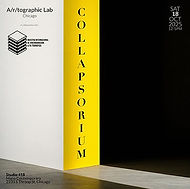

COLLAPSORIUM A/R/TOGRAPHIC LAB CHICAGO Iª Edición.
18 de octubre de 2025
Studio 418, Mana Contemporary
Chicago. USA


II JORNADAS DE ARTE, EDUCACIÓN Y ACCIÓN SOCIOCULTURAL
10 de abril de 2025
Facultad de Bellas Artes, Universidad de Málaga
Museo Ruso. Málaga. España


CORTODIANIDAD Fragmentos de memoria Audiovisual I. 2025
24 de abril de 2025
Facultad de Bellas Artes. Universidad Piloto de Colombia. Universidad Pedagógica Nacional
Auditorio Principal. Bogotá. Colombia


CORTODIANIDAD Fragmentos de memoria Audiovisual II. 2025
20 de noviembre de 2025
Facultad de Bellas Artes. Universidad Piloto de Colombia. Universidad Pedagógica Nacional
Auditorio Principal. Bogotá. Colombia


IMAGE PLAY. INTERNATIONAL VIDEO ART FESTIVAL
Del 12 al 15 de noviembre de 2025
https://www.image-play.com.pt
Teatro Municipal Baltazar Diaz. Funchal Madeira. Portugal
DOCUMENTACIÓN


MEMORIA VISUAL A/R/TOGRÁFICA'12.